In Fullerton, we often see projects where the soil conditions shift dramatically within a single lot, especially near the Coyote Hills or the older floodplains along the Santa Ana River. A proper soil mechanics study is the only reliable way to identify these variations before pouring a single yard of concrete. Our lab team runs standardized tests like SPT and Atterberg limits to classify the soil profile, measure shear strength, and estimate settlement under working loads. For sites with suspected expansive clays, we also recommend a complementary suelos expansivos analysis to assess volumetric change risk under seasonal moisture cycles.
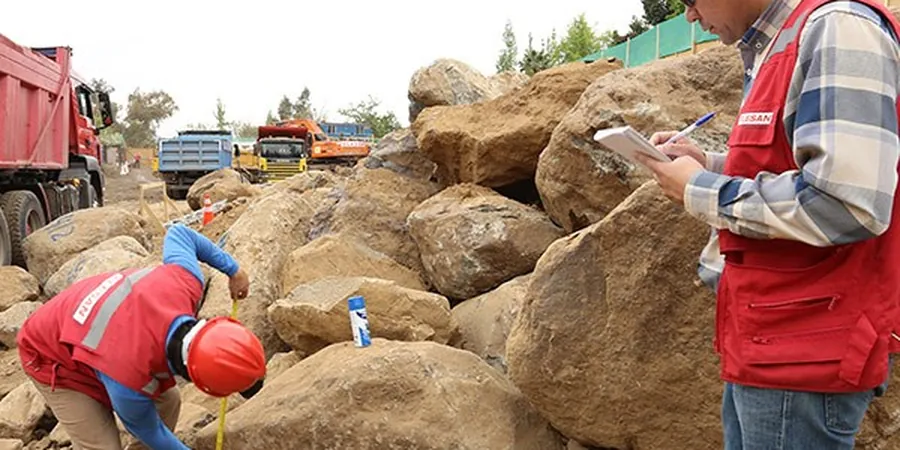
Variations in soil density and plasticity across a single lot in Fullerton can change the recommended foundation type from a shallow spread footing to a deep pier system.
Methodology and scope
- Continuous sampling using split-spoon and thin-wall Shelby tubes
- Classification per ASTM D2487 (Unified Soil Classification System)
- Unconfined compression tests on cohesive samples
- Compaction reference curves for engineered fill
Local considerations
The Mediterranean climate of Fullerton brings dry summers and occasional heavy winter storms, which can saturate the upper soil layers and reduce shear strength dramatically. If a soil mechanics study is skipped or rushed, the risk of differential settlement under a slab-on-grade increases substantially, especially on the silty deposits near the railroad corridor. We have also observed shallow groundwater in some residential areas east of Harbor Boulevard, requiring temporary dewatering during excavation. Our investigation typically includes post-storm moisture monitoring to confirm design assumptions hold under saturated conditions.
Applicable standards
ASTM D1586-18 (Standard Penetration Test), ASTM D2487-17 (Unified Soil Classification System), ASCE 7-22 (Minimum Design Loads – Seismic Site Class), IBC 2021 (Chapter 18 – Soils and Foundations)
Associated technical services
Standard Penetration Testing and Sampling
SPT performed per ASTM D1586-18 with continuous split-spoon sampling. We record blow counts every 6 inches and retrieve disturbed and undisturbed samples for classification and strength testing.
Atterberg Limits and Grain Size Analysis
Liquid limit, plastic limit, and plasticity index per ASTM D4318, plus sieve and hydrometer analysis per ASTM D6913 and D7928. Essential for identifying expansive or collapsible soils.
Unconfined Compression and Direct Shear Tests
Quick undrained shear strength on cohesive samples using ASTM D2166, and direct shear on granular materials per ASTM D3080 to evaluate internal friction angle.
Compaction Reference Curves and Moisture-Density Relations
Standard Proctor (ASTM D698) and modified Proctor (ASTM D1557) tests to establish optimum moisture content and maximum dry density for engineered fill specifications.
Typical parameters
Frequently asked questions
How deep do borings need to go for a soil mechanics study in Fullerton?
For a typical single-family home with a slab-on-grade, we usually drill to 20–25 ft. For two-story commercial buildings or structures with basement excavations, depths of 40–60 ft are common to reach competent bearing strata below the alluvial fill.
What is the difference between SPT N-value and allowable bearing capacity?
The SPT N-value is a measure of soil resistance during driving, while allowable bearing capacity is the net pressure a soil can support without excessive settlement. Correlations exist (e.g., Terzaghi, Peck), but we always verify with laboratory strength tests and settlement analyses for the specific footing geometry.
How much does a soil mechanics study cost in Fullerton?
A complete investigation for a standard residential lot typically ranges between US$3,100 and US$4,600, including two borings, field testing, laboratory work, and a written report with foundation recommendations. Larger commercial projects with more borings or specialized tests may exceed this range.
Which areas of Fullerton have the most problematic soil conditions?
Soils near the Coyote Hills and the older alluvial fans west of Euclid Street tend to have higher clay content and plasticity, which can cause heave if not addressed. Conversely, areas along the Santa Ana River floodplain may have loose sands that require deep foundations or ground improvement to control settlement.