A six-story parking structure was recently planned near the Fullerton Transportation Center, right where the water table sits less than 15 feet below grade. That kind of project demands a solid retaining solution during excavation, and the team turned to diaphragm wall design to keep the pit dry and the adjacent streets stable. In Fullerton, the upper soils tend to be silty sands from the Santa Ana River floodplain, underlain by older alluvium — a classic profile for deep shoring. Before committing to the wall geometry, we always run a site-specific seismic analysis because the 2014 La Habra earthquake reminded everyone how much ground motion can amplify in these basin sediments.
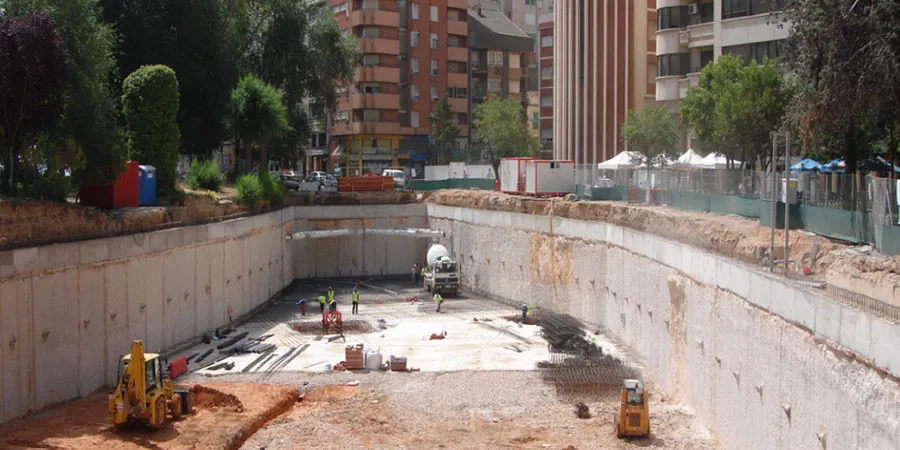
Fullerton's shallow water table and silty sand profile make diaphragm wall design the safe choice for deep excavations in Orange County.
Methodology and scope
Local considerations
In Fullerton, many engineers overlook the perched water table that sits above the first clay layer after heavy winter rains. That thin lens of trapped water can cause a sudden loss of trench stability if the slurry level drops even half a meter. We've seen it happen on a Commonwealth Avenue project where the contractor had to stop work for three days to re-stabilize the panel. Another common issue is the presence of old utility trenches — abandoned gas lines and sewer laterals create weak zones that the clamshell grabs can break through unexpectedly. A thorough pre-excavation utility survey and continuous slurry monitoring are non-negotiable here.
Applicable standards
ASCE 7-22 (Seismic Loads), IBC 2021 (Chapter 18 – Excavations and Shoring), ACI 318-19 (Concrete Design for Walls), FHWA-NHI-15-032 (Earth Retaining Structures)
Associated technical services
Structural Wall Design
We calculate wall thickness, reinforcement layout, and panel dimensions based on the specific soil stratigraphy and groundwater levels at your Fullerton site. The design follows IBC 2021 and includes seismic load combinations for the Orange County region.
Slurry Wall Specification & QA/QC
From bentonite mix design to trench stability monitoring, we provide technical specifications and on-site quality control for the excavation and concreting phases. Our team reviews panel joint details to minimize water infiltration.
Typical parameters
Frequently asked questions
How deep can a diaphragm wall be installed in Fullerton?
In Fullerton's alluvial soils, diaphragm walls are routinely installed to depths of 20 to 25 meters. The main constraint is the dense Pleistocene gravel layer at about 18 to 22 meters below grade, which slows excavation but provides an excellent toe bearing stratum.
What is the typical cost range for diaphragm wall design in Fullerton?
The cost for diaphragm wall design and construction in Fullerton typically falls between US$1,630 and US$6,270 per linear meter, depending on wall thickness, depth, and reinforcement requirements. This range includes structural design, slurry trench work, and concrete placement.
How does the high water table in Fullerton affect diaphragm wall construction?
A high water table, common near the Santa Ana River corridor, requires careful slurry density control to prevent trench collapse. We recommend polymer-based slurries in these conditions because they maintain stability even with minor groundwater fluctuations, and we always specify a tremie concrete placement to avoid segregation.