Retaining wall design in Fullerton must comply with IBC 2021 and ASCE 7-16, particularly for seismic earth pressures and surcharge loads from adjacent structures. The city’s location in the Peninsular Ranges batholith means shallow bedrock under colluvial soils, but localized alluvial fans along Coyote Creek introduce loose sands and silts. Geotechnical parameters like active/passive earth pressure coefficients and allowable bearing capacity are derived from site-specific borings and lab testing. Before designing a wall, the team typically runs a placa de carga to verify modulus of subgrade reaction for the footing, ensuring settlement stays below 1 inch under design loads.
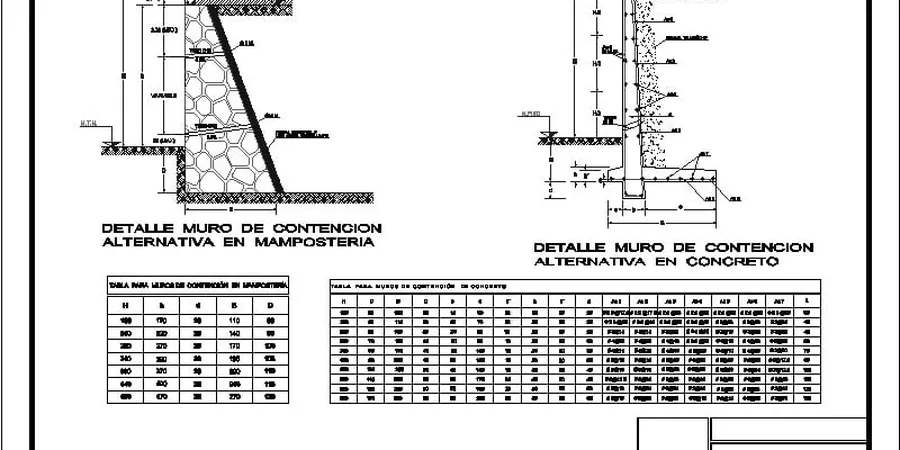
Active wedge pressures in Fullerton’s weathered siltstone can increase 40% after prolonged rain, requiring drained strength parameters from CU triaxial tests.
Methodology and scope
Local considerations
Fullerton sits within the Whittier fault zone, with a maximum considered earthquake of Mw 6.8. The Puente Formation’s interbedded siltstone and sandstone can amplify ground motions. Retaining wall design must include seismic earth pressures using the Mononobe-Okabe method with a horizontal acceleration coefficient of 0.29g. Differential settlement between the wall stem and backfill is another hazard: expansive clays can heave the footing 1–2 inches after wet winters, cracking the stem. The team mitigates this with a 6-inch gravel drainage blanket and a waterproof membrane on the backfill face. Without these measures, walls often tilt or bulge within five years.
Applicable standards
IBC 2021 (Chapter 18 – Soils and Foundations), ASCE 7-16 (Seismic Earth Pressures, Ch. 11–12), AASHTO LRFD Bridge Design Specifications (8th Ed., 2017), ASTM D1586-18 (Standard Test Method for SPT)
Associated technical services
Geotechnical Investigation & Soil Parameters
Boreholes to 30 ft depth, SPT sampling, laboratory classification (Atterberg limits, direct shear, triaxial), and wall-specific parameter report including active/passive pressures, base friction, and seismic coefficients.
Structural Wall Design & Detailing
Reinforced concrete cantilever or gravity wall design per ACI 318-19, with stem thickness, footing width, and steel reinforcement schedules. Includes stability checks against overturning, sliding, and bearing failure.
Drainage & Waterproofing Specification
Design of weep holes, perforated pipe collector, and granular backfill to prevent hydrostatic pressure buildup. Specification of waterproof membrane and geotextile separation layer for long-term durability.
Typical parameters
Frequently asked questions
What is the typical cost range for retaining wall design in Fullerton?
For a standard residential wall 6–8 ft high, geotechnical investigation plus structural design runs between US$1,190 and US$3,600. Larger commercial walls with seismic analysis and complex drainage can go higher. Contact us for a site-specific quote.
Do I need a soils report for a retaining wall in Fullerton?
Yes. IBC 2021 requires a geotechnical investigation for any wall retaining more than 4 ft of unbalanced fill. The report provides soil strength parameters, groundwater depth, and seismic design coefficients necessary for a safe, code-compliant wall.
How does expansive clay in Fullerton affect wall design?
Expansive clays in the Puente Formation can exert lateral swelling pressures of 1,000–2,000 psf. The design must include a drainage system to keep the backfill dry, a waterproof coating on the stem, and a flexible connection at the footing to accommodate vertical heave. Without these, walls often crack.
What seismic loads apply to retaining walls in Fullerton?
Per ASCE 7-16, the seismic earth pressure increment is calculated using Mononobe-Okabe with a horizontal peak ground acceleration of 0.29g and a site class D soil profile. Walls taller than 10 ft require dynamic analysis and may need tieback anchors or soil nailing to resist seismic overturning.