We roll out with a portable sampling rig and hand augers for tight backyards in Fullerton. The clay here can swell up to 15% in wet years. We extract undisturbed Shelby tubes and bulk samples from depths between 3 and 20 feet. Each sample goes straight to the lab for free swell tests, Atterberg limits, and suction measurements. The goal is simple: predict how much the ground will move under a slab or footing. We've mapped shrink-swell zones across the city, from the older residential tracts near downtown to the newer developments on the east side. That data lets us calibrate our laboratory models to match real behavior.
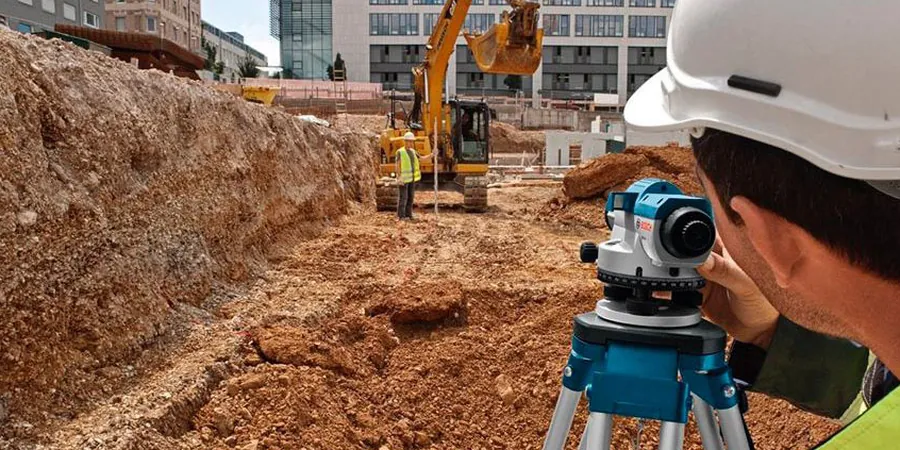
The clay in Fullerton can swell up to 15 percent in wet years, enough to crack a slab or lift a footing by several inches.
Methodology and scope
Local considerations
What catches many contractors off guard in Fullerton is the delayed swelling. You can pour a slab in summer when the ground is dry and see no movement for six months. Then a wet winter hits and the clay expands unevenly. We've seen garage slabs tilt 2 inches and interior walls crack in that first rainy season. The risk is highest in the alluvial fan deposits near the Santa Ana River channel. Our evaluation flags these zones early so the foundation design accounts for seasonal moisture changes.
Applicable standards
ASTM D4546 (Standard Test Methods for One-Dimensional Swell or Collapse of Soils), ASTM D4318 (Standard Test Methods for Liquid Limit, Plastic Limit, and Plasticity Index of Soils), ASTM D422 (Standard Test Method for Particle-Size Analysis of Soils), IBC Chapter 18 (Soils and Foundations – expansive soil provisions)
Associated technical services
Laboratory Swell-Consolidation Testing
One-dimensional swell tests under controlled surcharge loads to measure swelling pressure and free swell. We run these on undisturbed samples from the site. Results feed directly into foundation design calculations for post-tensioned slabs or deep foundations.
Field Moisture Monitoring & Suction Measurement
We install moisture sensors at multiple depths and measure in-situ soil suction using filter paper or tensiometers. This data predicts how the soil profile will behave through seasonal wet-dry cycles. It is especially valuable for sites near drainage channels or irrigated landscaping.
Typical parameters
Frequently asked questions
How much does an expansive soil evaluation cost in Fullerton?
A standard evaluation with laboratory swell and Atterberg tests runs between US$580 and US$1,790, depending on the number of samples and depth of investigation. Larger sites or projects requiring field moisture monitoring may cost more.
What is the difference between swelling pressure and free swell?
Swelling pressure is the vertical stress the clay exerts on a foundation when it is prevented from expanding. Free swell is the volume increase when the soil can expand without restraint. Both are measured in the lab and used together to calculate the expected heave under a slab or footing.
When should I request an expansive soil evaluation for my Fullerton property?
Do it before you finalize the foundation design. Any soil classified as high-plasticity clay (PI above 35) should be tested. We recommend the evaluation during the preliminary geotechnical investigation, ideally after the site has been graded but before any concrete is placed.