Fullerton’s slopes are shaped by the Puente and Yorba Linda formations, where weak sedimentary bedrock and seasonal saturation create ongoing stability challenges. Our slope stability analysis addresses these local conditions under California Building Code Chapter 18 and CBC Appendix J, evaluating rotational and translational failure modes. For steeper canyons affected by wildfire-denuded terrain, debris flow analysis quantifies post-fire runout and impact loads per Los Angeles County Sedimentation Manual guidelines, ensuring defensible designs for hillside development.
Residential subdivisions, hillside roadways, and infill lots in Fullerton routinely require engineered slope support. We integrate active/passive anchor design with retaining wall design to stabilize cut-and-fill slopes while preserving usable land area. Deep excavation projects near adjacent properties benefit from diaphragm wall design, which provides lateral support with minimal vibration in the region’s sensitive sandstone-shale sequences.
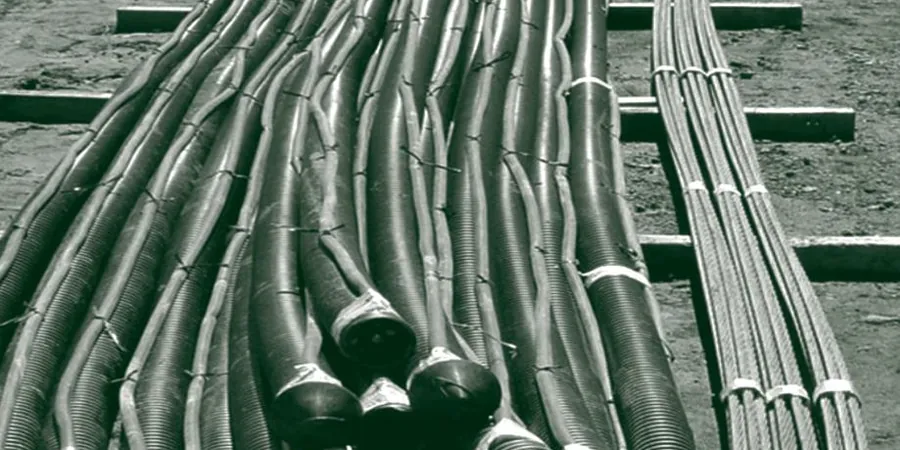
Verification testing on every production anchor is not optional in Fullerton — it is the only way to confirm bond zone assumptions in variable alluvial soils.
Methodology and scope
Local considerations
Beneath Fullerton, the groundwater table varies dramatically — from 15 feet deep near Brea Creek to over 60 feet in the upland areas south of Chapman Avenue. This fluctuation affects both the effective stress in the anchor bond zone and the long-term corrosion potential of the steel tendon. In our experience, the silty clay interbeds within the alluvium can exhibit moderate expansion when wetted, which may induce additional lateral loads on anchored walls if drainage is not properly designed. We have documented cases where anchors installed during dry summer months lost 10 to 15 percent of their preload after the first wet season because of soil softening around the bond length. A proper corrosion protection system and a sacrificial corrosion allowance on the tendon diameter mitigate this risk.
Applicable standards
ASCE 7-22 (Minimum Design Loads and Associated Criteria), IBC 2021 (International Building Code, Chapter 18), PTI DC35.1-19 (Recommendations for Prestressed Rock and Soil Anchors), ASTM D3689 (Standard Test Method for Deep Foundations Under Static Axial Tensile Load)
Associated technical services
Active Anchor Design (Tiebacks)
Prestressed ground anchors for temporary and permanent shoring walls, designed per PTI Class I corrosion protection. Includes lock-off load calculations, bond zone verification, and field proof testing up to 150% of design load.
Passive Anchor Design (Soil Nails)
Non-prestressed soil nail walls for cut slopes and excavation support in Fullerton's alluvial soils. We design nail spacing, length, and grout bond capacity using the FHWA soil nail manual and verify with pullout tests per ASTM D3689.
Typical parameters
Frequently asked questions
What is the typical cost range for an anchor design and testing package in Fullerton?
For a standard shoring wall with 20 to 40 anchors, including design, proof testing, and reporting, the cost typically ranges between US$920 and US$3,540 depending on anchor length, corrosion protection class, and site access conditions.
How deep do anchor bond zones need to be in Fullerton soils?
Bond zones typically extend 15 to 25 feet behind the active wedge. In the older San Pedro Formation, bond lengths can be shorter (10–15 ft) because of higher skin friction, while in the upper alluvium we often need 20–30 ft to develop the required capacity.
Do Fullerton anchors require special corrosion protection?
Yes. The IBC and PTI require permanent anchors in aggressive soil (resistivity below 2,000 ohm-cm or pH below 5.5) to have double corrosion protection. In Fullerton, we frequently specify Class I protection because the alluvial groundwater can be moderately corrosive to steel.